

Why Most Traders Can't Scale Their Best Strategies—And How to Fix It
The 5 Criteria Every Trader Needs to Evaluate the Authenticity and Scalability of Their Edge

Most traders obsessively search for trade setups or “edge,” yet rarely stop to consider how—or even if—that edge truly fits into their broader trading business.
Let’s say you've found a promising setup.
You've quantified it using Expected Value (EV), a crucial first step that I've covered extensively here.
But there's a deeper reality most traders completely overlook:
Even a statistically profitable strategy might not scale beyond a handful of contracts.
Recently, I tweeted the following:
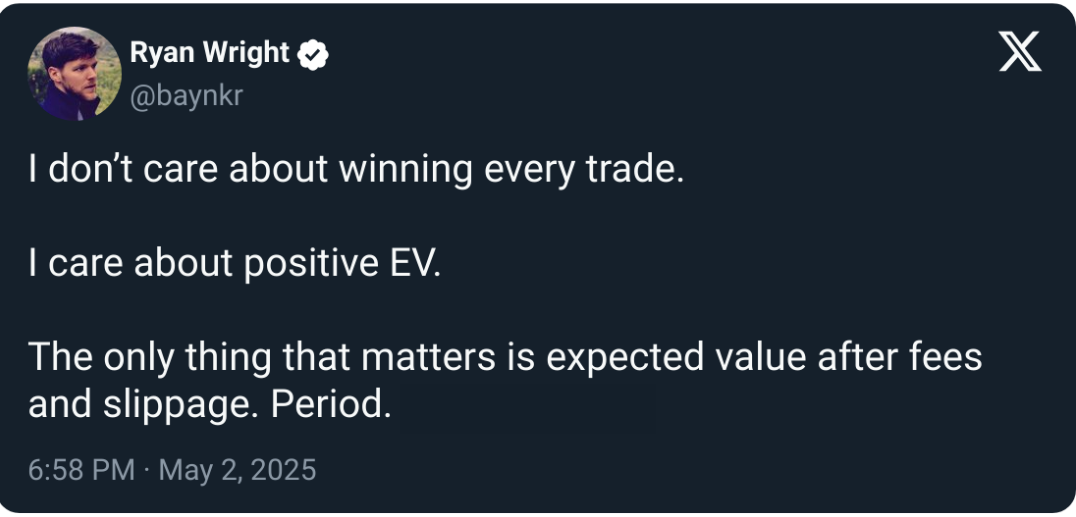
But there's more nuance here.
Several traders reached out asking me to clarify exactly what else they need to consider beyond expected value.
This article is my answer.
EV is foundational, but there are critical nuances you must consider if you hope to scale your strategies successfully.
Even a positive EV strategy can evaporate when you start increasing size.
Expenses, slippage, and especially market impact become critical at scale.
Today, I'm outlining 5 essential criteria you should use to evaluate any potential edge—criteria designed to answer the critical question:
“Is this edge worth pursuing, not just at small size, but as a scalable part of my trading business?”
By the end of this article, you'll know precisely how to ensure your next promising edge doesn't turn into an expensive illusion.
Why Real Trading Edge Is All About Probabilities—Not Predictions
At its core, a trading edge means having a consistent mathematical advantage—positive expected value (EV)—across many trades.
Edge isn’t about predicting single outcomes; it’s about probabilities and consistently favorable odds.
As detailed in my previous article, "Making Decisions Under Uncertainty", professional traders focus on decision quality based on Expected Value—not on individual outcomes.
Think of flipping a coin:
Heads pays $1.20, tails costs $1.00. Each flip is uncertain, but your 20% edge ensures profitability over hundreds of flips.
Your trading edge must function the same way.
The 5 Essential Criteria Every Profitable Trading Strategy Must Pass
Evaluate any potential strategy systematically using these five clear, practical criteria:
Durability (signal longevity)
Capacity (scalability without edge erosion)
Executability (ease/reliability of execution)
Measurability (how precisely quantifiable your strategy is)
Breadth (frequency of opportunities)
If even one characteristic is missing, the edge is effectively useless.
1. Durability: Is Your Trading Edge Durable Enough to Be Worth Your Time?
Durability answers:
"Will this edge persist long enough to justify the investment of time, capital, and resources required to exploit it meaningfully?"
Durability follows a clear hierarchy, detailed previously in ‘Why Trading Edge Exists (and the 4 Forces Behind It)’:
Behavioral Inefficiencies: Highly durable, anchored in consistent human behaviors (e.g., overreactions to news).
Structural Inefficiencies: Durable due to slowly changing institutional mandates (e.g., index rebalancing).
Informational Inefficiencies: Short lived, quickly disseminated.
Analytical Inefficiencies: Temporarily protected by complexity, but eventually eroded.
Clearly identify the source fueling your edge to know if it's worth pursuing.
2. Capacity: At What Trade Size Will Your Edge Break?
Capacity explicitly asks:
"At what point does increasing my position size degrade or erase my edge?"
Capacity typically isn't a major concern under a few hundred contracts in liquid markets (like ES, NQ, or CL during peak hours).
But it matters significantly if:
You're trading thinner, less liquid markets.
You're frequently trading during low liquidity sessions (overnight or holidays).
You're executing high turnover scalping strategies.
Many traders are genuinely surprised when their profitable strategies suddenly deteriorate upon scaling up—often because they’ve underestimated cumulative market impact and slippage.
Aggressively sizing up without fully understanding your strategy’s capacity limits doesn’t reflect boldness or skill;
it reflects a misunderstanding of market mechanics that can quickly turn a profitable strategy into a losing one.
I've had scalping strategies perform exceptionally at smaller sizes (around 5 contracts) but collapse north of 30 contracts—because cumulative execution costs erased profitability.
I still use some of these strategies, fully aware of their capacity limits.
Practical litmus tests:
If your average fill deviates more than 0.2 ticks from mid price in liquid futures, you're approaching your capacity.
Individual orders exceed 0.5% of recent volume bars.
Cumulative daily volume surpasses 2% of average daily volume.
Capacity might not be today's biggest problem for smaller traders, but understanding it now sets you up for sustainable growth.
3. Executability: Can You Consistently Execute at Required Prices?
Executability addresses a critical question:
"Can I realistically achieve the entry and exit prices my strategy demands?"
Explicitly measure:
Fill Rates: Realistic frequency of capturing intended prices.
Slippage: Difference between planned and actual fills.
Execution Infrastructure: Reliability and speed of execution.
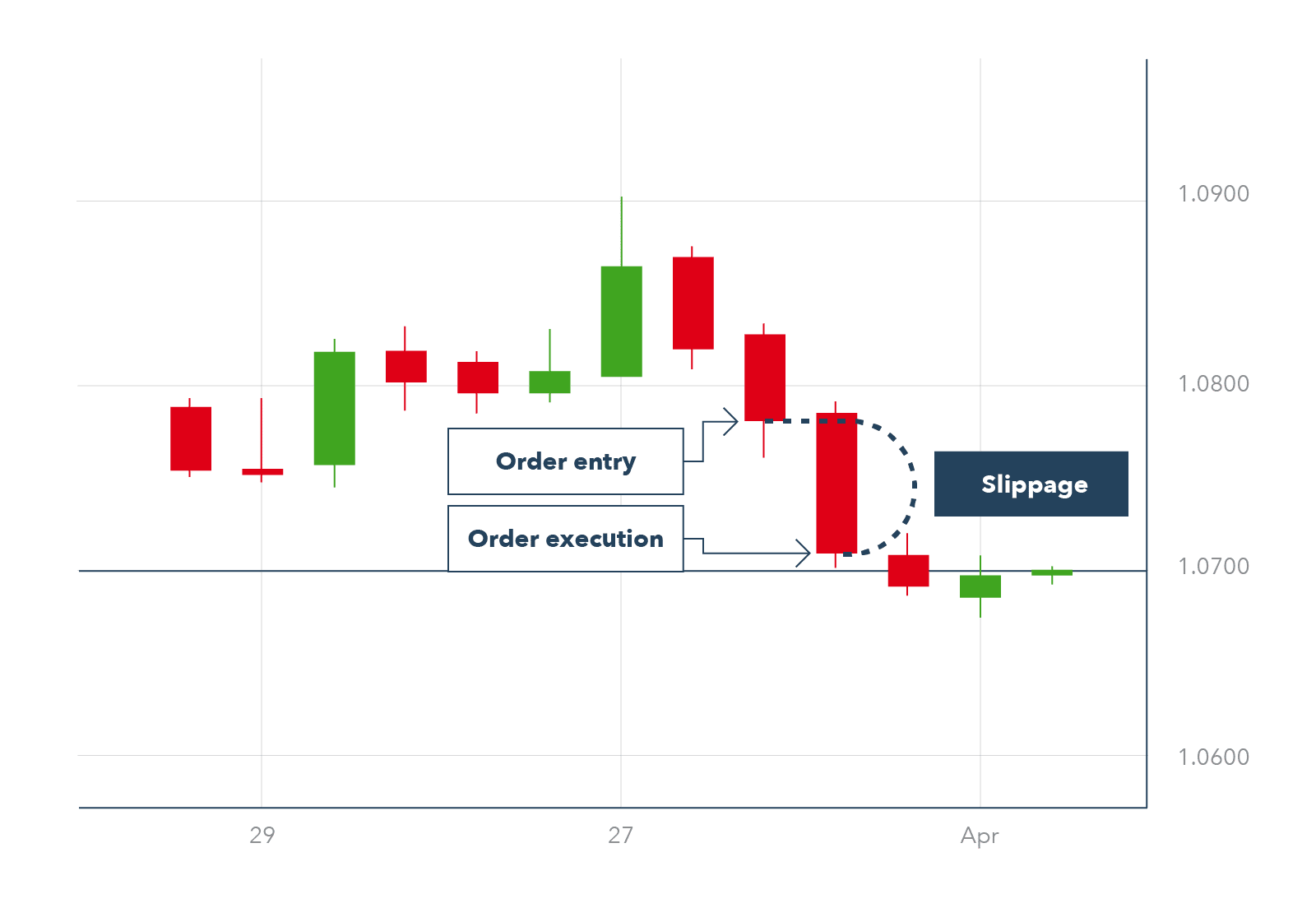
Professionals rely exclusively on specialized platforms like TT (Trading Technologies), avoiding retail focused tools.
Your personal internet latency is unavoidable.
Retail platforms compound this latency by routing orders through multiple intermediaries, significantly increasing slippage.
Consider E-mini S&P (ES):
One tick equals $12.50.
Bid/offer refreshes every ~300 microseconds.
Professional infrastructure (~100 microseconds latency) yields negligible slippage (~0.02 ticks).
Retail platforms (~100–300 milliseconds latency) typically experience 0.2–0.3 ticks of slippage—costing ~$25–$37.50 per 10 lot round turn (avg. over many trades).
These hidden costs compound quickly at scale, silently eroding your quantified edge.
Always ask:
"After accounting for execution costs, does this strategy remain profitable?"
If unsure, abandon immediately.
4. Measurability: If You Can’t Quantify Your Edge, You Don’t Have One
Without rigorous measurement, traders prematurely abandon genuine edges during inevitable drawdowns.
Measurement provides:
Optimal position sizing
Precise risk calibration
Statistical verification
Adaptation to market changes
Even discretionary traders must clearly quantify:
Win rates by setup
R-multiple distributions
EV per trade
Drawdown characteristics
Without measurable evidence, your "edge" is just speculation.
5. Breadth: Does Your Edge Provide Enough Opportunities?
Breadth measures how frequently your edge appears:
Low Breadth (1): Few opportunities per quarter.
High Breadth (5): Many independent daily opportunities.
Breadth matters significantly for scaling—more frequent opportunities allow capital deployment without concentrated risk.
The Edge Evaluation Matrix: Quickly Evaluate Your Strategy
Systematically evaluate on a 1–5 scale:
Durability
Capacity
Executability
Measurability
Breadth
Multiply for an Edge Quality Score (1–3125):
<50: Small-scale niche.
50–150: Modest prop potential.
150–300: Institutional viability.
>300: Exceptional robustness.
Multiplication ensures critical weaknesses aren't hidden.
Next Steps: Turn These Insights into Real Trading Success
This framework isn't theory—it's how professional traders achieve consistent profitability.
In my next article, we'll cover systematic edge discovery and refinement.
Until then, rigorously evaluate your strategies using this practical approach.
That's how you stop guessing—and start winning.
Hi Ryan, as far as slippage, if I only enter using limit orders is it still possible to have slippage on my entries?
Great writing, thank you!
What band would you rate 2-3 trades daily, Breadth (3)?